
We’re Returning to Alaska to Catch Giant Rainbow Trout. Apparently I Need to Learn to Spey Cast.
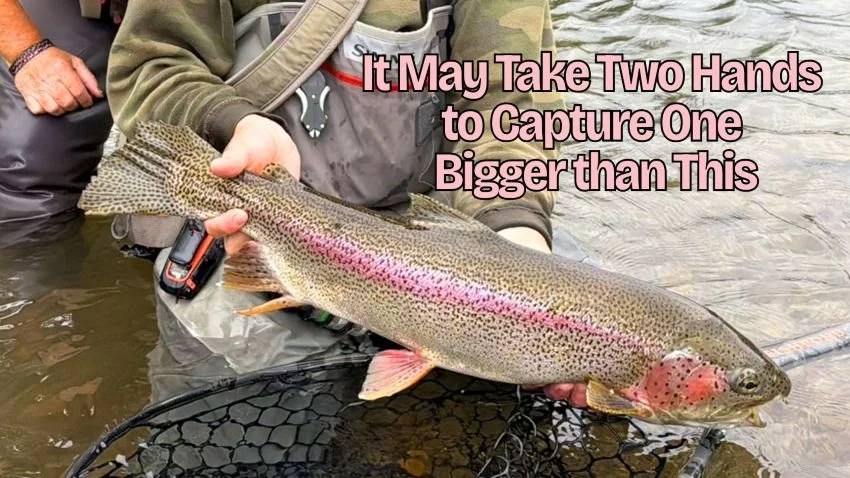
Even after four trips to Bear Trail Lodge, I’m still at best a novice fly angler.
So many things about the process are the opposite of what I do when I’m bass fishing at home. I may learn a little bit on each trip, but then I forget it in the two- or three-year interim before the next one.
Still, I want to get better because the trophy rainbow trout are such a compelling target.
After catching our personal bests on our most recent August 2026 visit, Hanna and I quickly made the decision to return next September, which just about every guide told us is their favorite month to catch giants on the Naknek and in the surrounding creeks and river.
Then our guide, Axel Howard, dropped a bomb on me.
One of the best ways to catch a trophy that time of year is through Spey casting.
I’d heard the term before but had never taken the time to figure out what it meant or how to do it.
So I kind of nodded at him as if I knew what he was talking about and resolved to figure things out before we go. That’s partially because I don’t want to look like a complete clownshoes when I hit the water (although that hasn’t stopped me on our previous visits), but mostly because I’m really dedicated to giving myself the best chance to come home from Alaska having done everything I can to accomplish one of my new obsessions:
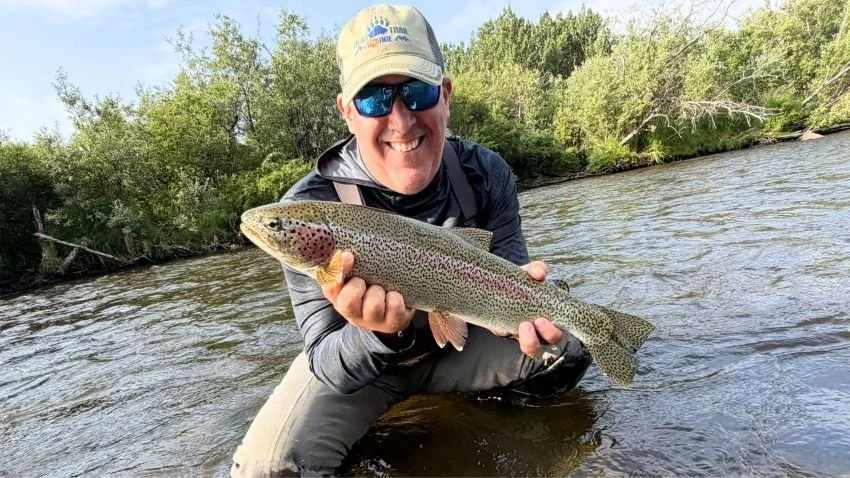
Catching a 30-inch rainbow trout.
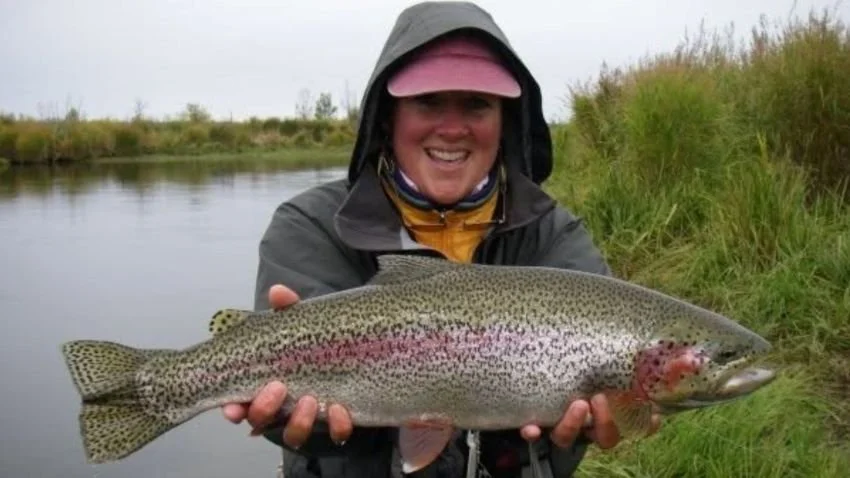
Photo courtesy of Nanci Morris Lyon
What is Spey Casting?
First, to make things abundantly clear, I am absolutely not a Spey casting expert.
However, I do like catching big fish and I’m willing to do what it takes to make that happen – whether it’s traveling to the ends of the earth, testing my physical fitness or learning a new technique. As a conventional angler, Spey casting was not on my radar, but now that it is I’m trying to learn as much as I can about it. If I really get motivated, I’d like to take a lesson or two before I go.
As far as I can tell, here are the basics:
What is the advantage of Spey casting?
It’s not a single cast, but rather multiple related casts that allow you to load and redirect a long fly line without making a conventional backcast.
That matters when you're standing in a river with trees, rocks or other obstacles behind you. Instead of needing a big open area to throw the line backward before launching it forward, Spey casting uses the water and the rod to help generate the forward cast.
In other words, you can make a long cast when a traditional backcast would be difficult or impossible.
Will I be using the same light flies and beads we’ve used for summertime Alaska trout fishing?
This is one I'm particularly curious about.
Spey casting is a casting technique, not a particular type of fly. So the fact that I'm using a two-handed rod doesn't automatically mean I'm going to be throwing some giant, exotic fly I've never seen before.
But from what I’ve learned September trophy rainbow fishing may involve different tactics and fly patterns than the summertime fishing we've done at Bear Trail, so I'll defer to the guides on what they actually want me to throw — and why.
How else does it differ from traditional fly casting?
Spey casting utilizes longer rods – often 11 to 15 feet – and a two-handed grip.
But the biggest difference isn't simply the extra hand or extra length.
With traditional fly casting, I’ve done a little bit of roll casting, but as a general rule I'm accustomed to loading the rod by moving the line backward and then forward. Spey casting uses a series of movements that allow the rod to load while keeping most of the line in front of or near the angler.
That's the part that may cause me to struggle initially
Is it tiring?
I’ll tell you after I’ve tried it, but I’ve heard that the two-handed technique can actually be less tiring over the course of a long day because you're distributing the work between both hands and using the rod more efficiently rather than relying primarily on your casting arm.
That makes intuitive sense to me.
But I'm guessing that at least initially I will be less efficient than more experienced Spey casters. I have to remember to conserve energy rather than go on an all-out warp speed blitz on Day 1.
Do I need to buy a Spey rod?
I’m an equipment junkie and rarely pass up an opportunity to buy new gear. Fortunately, Bear Trail Lodge will provide everything that I need – everything from the two-handed rod and specialized line to the flies and also waders.
If I get into Spey casting down the road, perhaps I’ll buy my own, but there’s really no need as their packages include premium gear.
Do I actually need to learn it?
Probably not. We’ve caught some big rainbows with at-best mediocre fly casting skills, and I’m sure that on this trip there will be times when traditional casting methods excel.
But if the guides who spend their lives chasing these fish tell me that Spey casting can give me an advantage during September's trophy-rainbow fishing, why wouldn't I at least try to learn it?
I’m not taking a deep dive into Spey casting just because September is “Spey season.” I’m doing so because the fishery changes at that time of year. The Naknek is a big river and this will help me cover a ton of water and reach zones that would be difficult to hit with conventional casting. Furthermore, the point isn't always to launch a fly as far as possible and immediately strip it back. The two-handed rod can help me make the cast, control the line and present a streamer as it swings through the current.
I have no illusions that I’ll become a master Spey caster. But I am all about putting myself in position to catch a 30-inch rainbow.
Want to See What I’m Talking About?
I'm a visual learner, and there's only so much I can absorb by reading about Spey casting. These videos helped me get a better sense of what the heck I'm supposed to be doing.
A 7 Minute Spey Fishing Lesson for Beginners
Fly Fishing Techniques: Spey Casting | YETI
Spey Casting Basics | How To
If You Want to Go Deeper
Next Steps
I know that at best I’m going to take a lesson or two before we go back to Alaska. Knowing myself, there’s a reasonable chance that I won’t even do that. Despite the best intentions, I certainly won’t spend months becoming a Spey caster.
However, I do want to become competent enough that my guide doesn't have to spend half the morning untangling me.
I'll probably watch some more videos, find someone who actually knows what they're doing and try to get enough practice under my belt that the basic movements aren't completely foreign when I step into the Naknek next September.
Then comes the real test.
Can I actually use a two-handed rod to help me catch the fish I've become obsessed with catching?
I guess we'll find out.
Want to Chase a Giant Alaska Rainbow?
If you're thinking about an Alaska fishing trip but don't consider yourself an accomplished fly angler, don't let that stop you. I've made four trips to Bear Trail Lodge and I'm still learning.
That's part of what makes the experience so much fun.
Bear Trail provides the equipment and experienced guides, and you don't have to arrive knowing how to Spey cast. If you're interested in experiencing the Naknek and putting yourself in position for a trophy rainbow — whether you're an experienced fly angler or a conventional fisherman like me — we'd be happy to help you plan the trip.


Praesent id libero id metus varius consectetur ac eget diam. Nulla felis nunc, consequat laoreet lacus id.