

Most Influential Bass Tackle Pro Staff Ever?
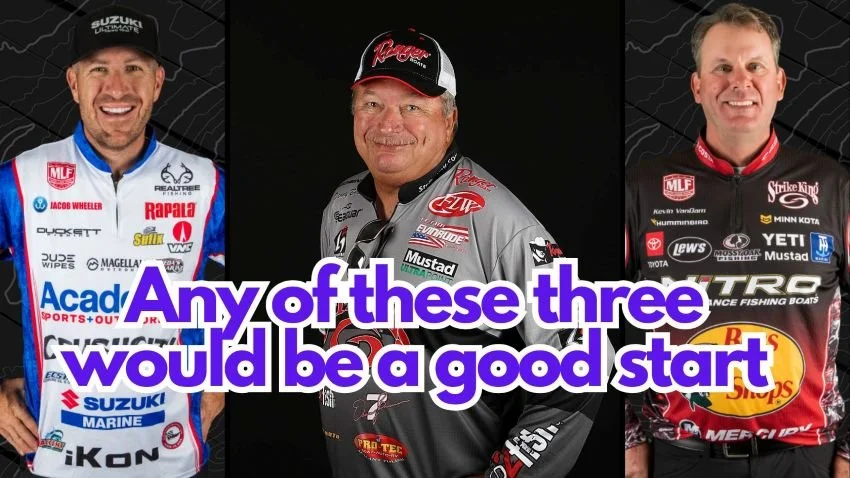
There have been quite a few distinguished pro staffs in the history of modern competitive bass fishing – but few have become truly historically meaningful and influential.
That’s partially because many pros move around consistently, looking for better deals (to be fair – that may sometimes be spurred by budgeting choices and business differences) and also because there are more hands in the pot than ever before.
Still, when I look back at my history following the sport – which began in the early 1980s, but didn’t really become serious until the mid-1990s – there are a few that stand out.
In my mind, in order for a pro staff to distinguish itself, there have to be several factors in play:
First, of course, the anglers themselves must be exceptionally accomplished;
Second, the products need to be historically significant; and
Third, the staffers need to move the commerce needle by winning or amassing major catches with the products in question.
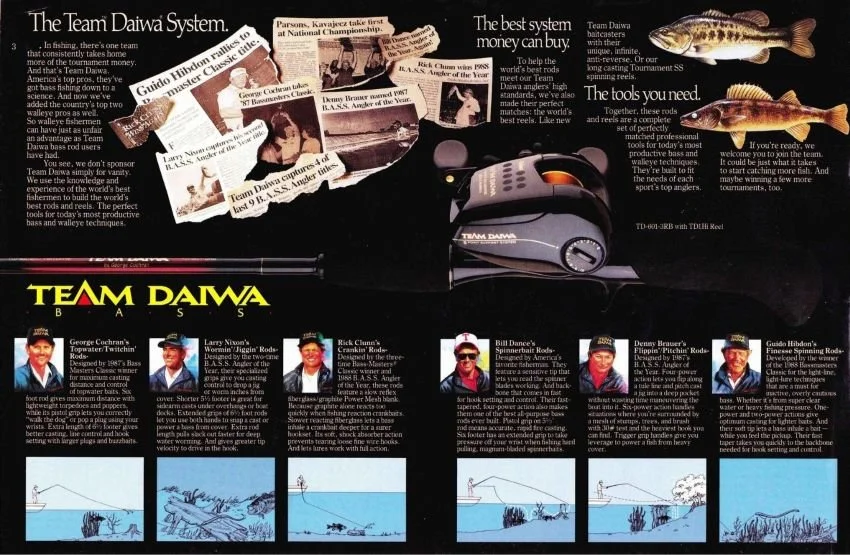
As Terry Battisti previously documented at Bass Fishing Archives, the 1990 Team Daiwa pro staff was exceptional with respect to all of these elements and just got better with age. The group included six eventual Hall of Famers, five of them Classic winners, three of them winners of multiple Classic winners. The lone man out? Bill Dance, arguably the most famous bass fishing television host of all time, and a three-time Bassmaster AOY. Two-time Classic champ George Cochran was the only one of the six who never won AOY, but the other five made up for it with nine of them.
I started my writing career around the same time that the Elite Series began, give or take a few years, so I’m probably prejudiced in favor of that era, but I think there are several reasons it produced such great pro staffs. The primary one was ESPN’s involvement in the sport and the projection that it would be “the next NASCAR.” That led both endemic and non-endemic companies to spend heavily. It was also prior to Wall Street’s meltdown. Additionally, we had new streams of anglers coming into national prominence in meaningful numbers – including but not limited to western pros and Japanese transplants.
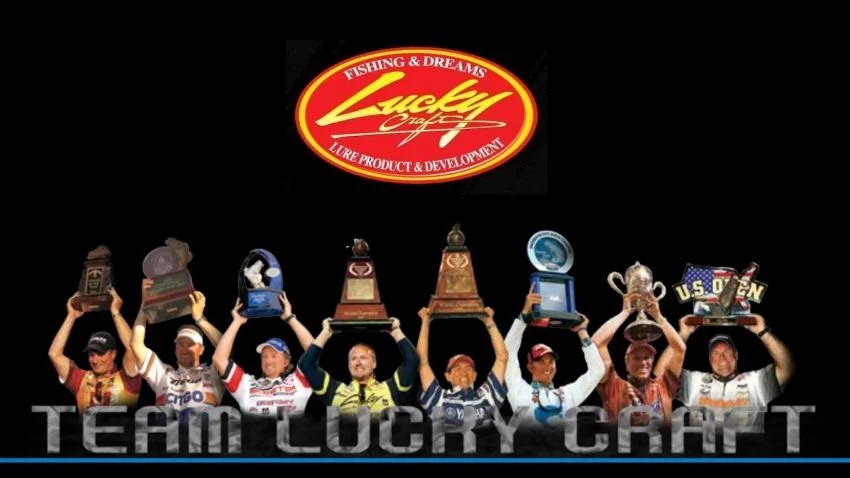
That’s a big part of why Lucky Craft was so meaningful. They were the first widely influential JDM company on the US bass scene. I remember spending $15 for my first Pointer 78 and thinking that was a line in the sand I couldn’t cross. Little did any of us know at the time that we’d cross it again and again – and it would be worth it.
They proved that not only would we pay for premium tackle, but that it could make a major difference in winning big tournaments. Their staff at the dawn of the Elites included
Skeet Reese, who would win both a Classic and the AOY title in those early years, while likely being more widely-seen on the national stage than any other western pro, including Aaron Martens;
Another westerner, Brent Ehrler, who won not only EverStart/Series AOYs on the west coast, but also the Forrest Wood Cup in 2006;
Takahiro Omori, the first international Bassmaster Classic winner;
Gerald Swindle, who had a personality bigger than any of them and went on to win multiple AOY titles;
Casey Ashley, who later won a Classic;
Gary Dobyns, one of the west’s all-time highest money winners; and
Joe Thomas, who was influential not only as an angler, but also as a TV host
There were others, too, like Marty Stone, Anthony Gagliardi (later FWC champ) and Kelly Jordon – and their presence was accentuated by Mike Auten’s Classic Patterns television series. The company saw the value of investing in educational media as a way to promote their products and their pros.
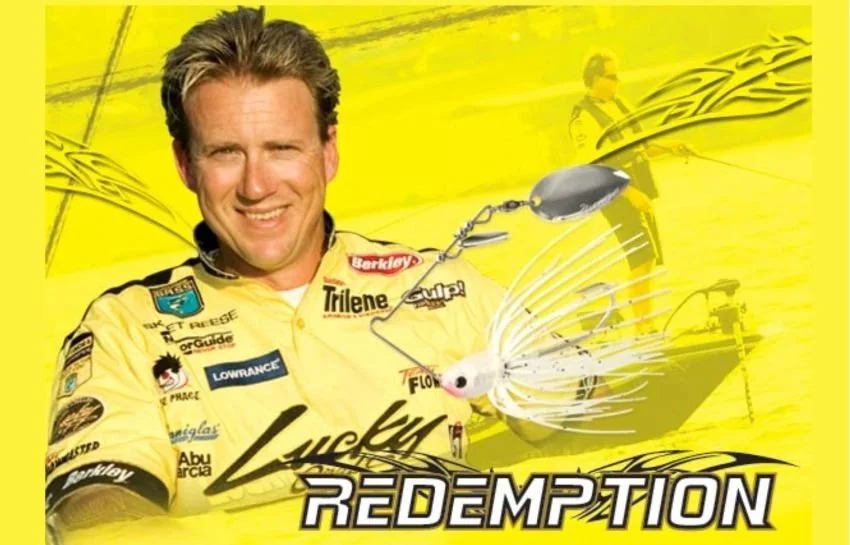
Lucky Craft has remained influential and popular – although that impact was later diluted by the entry of additional JDM companies into our tackle boxes. One company that had a great impact, and great pro-staff, but which later went belly up was Tru Tungsten.
Just as it may be hard for young anglers to imagine a world without JDM products, it might be even harder to think that we once used lead weights for just about everything. Tungsten wasn’t even in the equation until after the turn of the century.

Tru-Tungsten was the early innovator in that space and their pro-staff was absolutely loaded. It included multiple Hall of Famers such as:
Denny Brauer
Mike Iaconelli
Ken Cook
Along with winners and lowercase-i-influencers including Ish Monroe, Brent Ehrler and Michael Bennett.
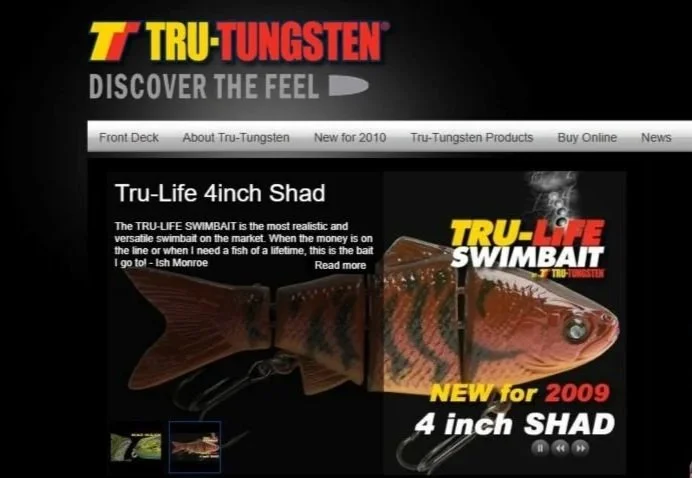
They had a stranglehold on the product that suddenly every serious bass angler realized provided measurable benefits, even if the cost of replacing the prior “best” was gauged in multiples. I have no insight into how or why the company crashed, but perhaps it had something to do with too many high-paid pros and too much expansion in a hurry – they quickly added to their wheelhouse of weights with frogs, swimbaits, soft plastics and other products that didn’t quite live up to the hype.

The next one which stands out in my mind is Strike King through the early years of the Elites. It didn’t hurt that they had KVD, the greatest angler of all time, leading the charge and winning on seemingly every bait that he liked – whether it had his name on it or not. The KVD 1.5 and 6XD became standards, as did his spinnerbaits, while the Wild Thang may have been the lone tournament-winner for him that didn’t last.
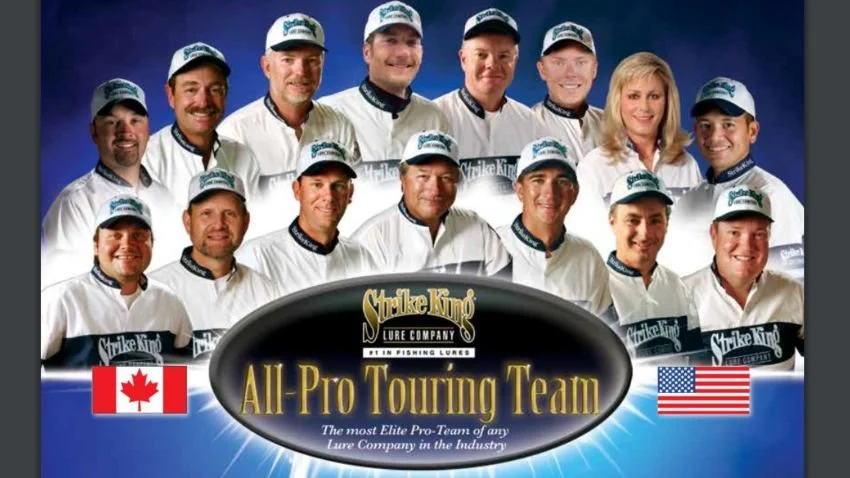
He was joined by Brauer, arguably the most important tournament flipper of all time (yes, you could easily award that title to Dee Thomas, although purely in terms of marketing he was a victim of geography and timing). Two-time Classic winner George Cochran was there, too, as was three-time AOY Mark Davis, who won a Classic, too (albeit on another brand’s crankbait).
Shaw Grigsby was there, too, as was Greg Hackney, who quickly won a FWC and then an Elite Series AOY title.
The depth of their roster was impressive, too, as Clark Wendlandt, Mark Rose, Mark Menendez, Keith Combs and a host of others were affiliated with SK at its peak.
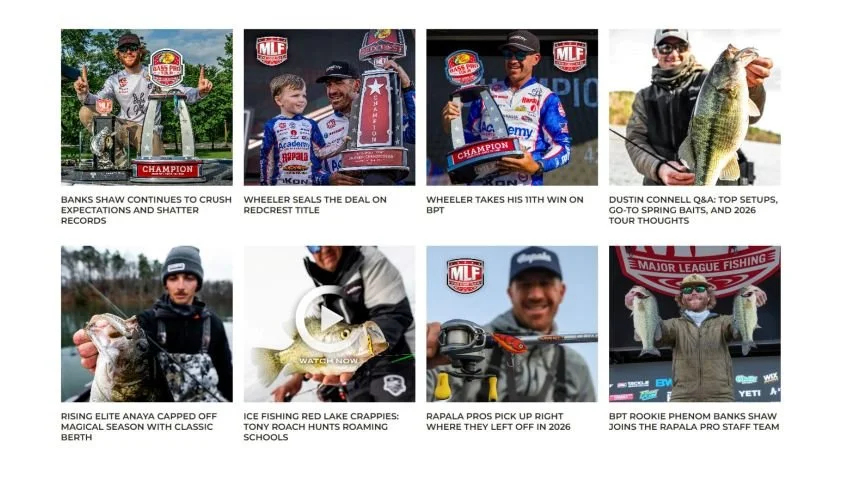
But right now we have the makings of a group that could someday challenge those great assemblies of pros under one roof: The Rapala/CrushCity group.
They include:
Jacob Wheeler, the one active angler who is consistently in the conversation when it comes to discussing who will join the likes of KVD, Clunn and Roland on Mt. Bassmore;
Dustin Connell, who has won three RedCrest titles;
Kyle Welcher, an Elite Series AOY who set the Bassmaster margin of victory using a then-new CrushCity soft plastic;
Ott DeFoe, the 2019 Bassmaster Classic winner;
Banks Shaw, arguably the hottest young angler on the planet, already a BPT winner and on pace for back-to-back Tackle Warehouse Pro Circuit AOY titles;
Fisher Anaya, last year’s EQ points champ and a winner in only his second Elite Series tournament; and
Seth Feider, prior Elite Series AOY and one of the most distinctive personalities in the sport.
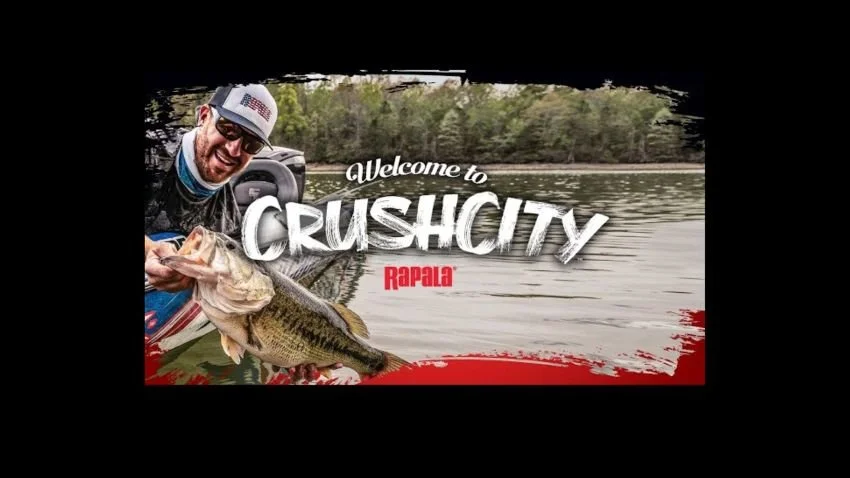
Moreover, while amassing wins and titles they’ve worked collaboratively to develop pro-drive products that win tournaments – on both the national and the local levels.

They have a long way to go to match the likes of Dance, Hibdon, Brauer, Clunn, Cochran and Nixon, but a group of that caliber may never be matched again. It’s a different era, with more major tours, far more true professional anglers, and a great many more companies spending dollars on sponsorships. In rods and reels alone, there were far fewer choices in 1990 than there are in 2026. So it’s a testament to people like Rapala’s Dan Quinn when they can have the foresight to grab up-and-coming stars.
Whether you like it or not, we may be seeing a low budget version of basketball’s sneaker wars in the coming years, as savvy companies and pro staff directors scout younger and younger talent looking to lock up early successes.
Through our involvement with the Bass Fishing Hall of Fame and attendance at many great fishing events, we’ve gotten to meet many of our “heroes” — the people who shape the sport we love.