

Flying to Bolivia for a Fishing Trip
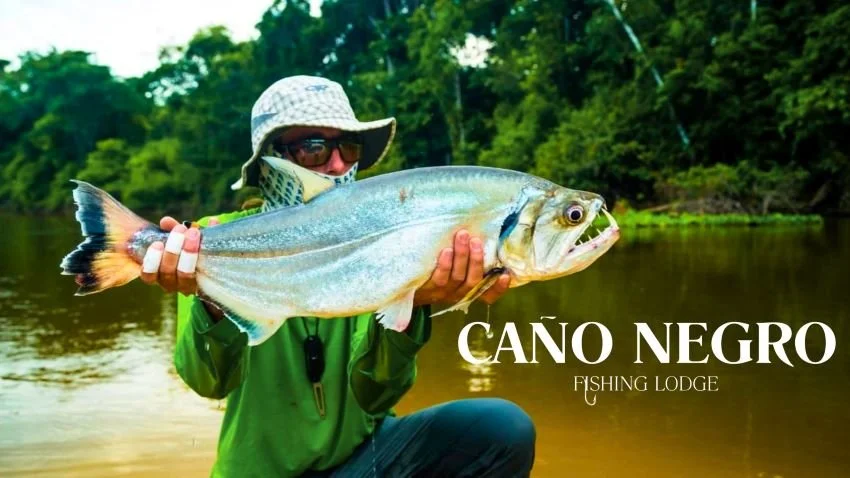
We’re on the verge of doing something we hadn’t considered until quite recently – flying to Bolivia for a jungle fishing trip featuring arapaima, payara and a variety of other species. While we have ample experience flying into Manaus for fishing trips in the Brazilian Amazon, and expect our upcoming trip to Buenos Aires to be a well-trodden path, this one will be a little more wild and uncommon.
That’s not because we’re headed to a small city. Indeed, Santa Cruz de la Sierra is Bolivia's largest and most populous city, but it doesn’t feel like it’s much of a tourist hub for many Americans. That honor would fall to the capital city of La Paz to the west, which is a cultural center at an extremely high altitude, known for its colonial architecture.
Requirements for Travelers to Enter Bolivia
Any foreign national entering Boliva needs to have a passport that is valid for at least six months. You also need the following:
Proof of a Yellow Fever vaccination, if you are heading to certain regions.
Proof that you have a return flight home.
Proof of accommodation. In our instance, the lodge will provide this.
Finally, and this is the sticking point for most of us who are used to travel more simply, you’ll need a visa. It costs $160 USD, and is valid for 10 years from the date of issue. This document can either be obtained by applying in advance at a Bolivian embassy or consulate in the U.S. or a neighboring country. Otherwise, you can buy your tourist visa at any Bolivian land or air border.
How to Fly to Santa Cruz de la Sierra
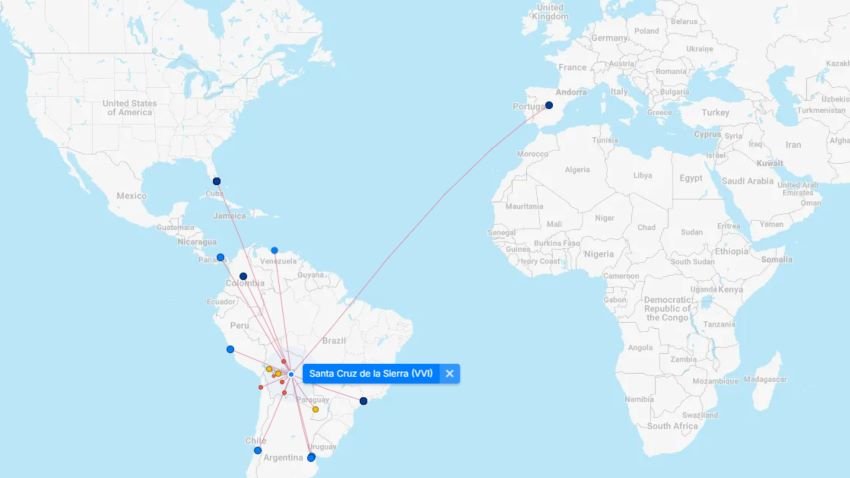
Because Santa Cruz de la Sierra (Viru Viru International Airport; VVI) doesn’t have a lot of North American tourist traffic, and certainly less angling tourism than several of the surrounding countries, the city doesn’t have a ton of direct flights from America.
In fact, in recent years the only direct flight to and from the US is daily service from Miami on Boliviana de Aviación, the country’s national airline. For many years, American Airlines ran flights between Miami (MIA) and VVI, but those were discontinued in late 2019.
The good news for travelers like us, based in the Mid-Atlantic region, is that starting in November of 2025, they’ll also offer flights to and from Washington Dulles International Airport (IAD). It makes sense, as the DC area has the country’s largest Bolivian population. The flights will be seasonal, running from November through February and then through much of the summer.
If you’re not near either of those cities, or they’re not reasonable places to stop over, you’re not completely out of luck. There are also flights to Santa Cruz de la Sierra on Copa from Panama City (PTY). As we’ve documented previously, Copa continues to increase their direct flights between North American cities, so that’s a great option – plus they offer an attractive stopover program if you’d like to spend some time in Panama.
Additionally, you can fly on Aviana through Bogota, Colombia, another Latin American airline that flies directly from Bogota to and from numerous US and Canadian cities.
Getting Fishing Luggage to Santa Cruz de la Sierra
While some Bolivian lodges provide their guests with fishing tackle, most serious anglers will want to bring at least some of their own gear. Airline travel in general has become more difficult with rods, reels and lures – and that’s with domestic airlines we’re familiar with and with whom we can converse in our native language. In a foreign country, you may be even more at the arbitrary whims of a desk agent or luggage handler. That’s why it’s critical to know the rules.
Boliviana de Aviación – The good news about BoA is that all fares include at least one piece of luggage up to 23 kg at no additional charge. These free pieces can be up to 62 linear inches (length + height + width).
Their policy with respect to sporting equipment in general and fishing equipment in particular, is less clear. It reads, in pertinent part:
If you need to travel with any type of sports equipment, you must take into account that skiing, golf, diving, fishing, bowling, windsurfing, surfing, bicycles, snowboarding, bow and arrow, paragliders and parachutes -after signing a limited disclaimer-, may be included in your checked baggage allowance. In case of excess weight or oversize, it will charge you the corresponding amount.
According to their excess/oversize baggage rules, for flights from the US to Bolivia oversized baggage will be charged $130 USD. However, they state that this is capped at 90.5 linear inches, so be careful that your rod tube is not too long.
Avianca – Avianca specifically mentions fishing equipment in their baggage policy, but unfortunately it doesn’t clear much up. The first mention deals with carry-on luggage: “If your sports equipment meets the conditions and is on the following list, you'll be able to bring it with you in the aircraft cabin….Fishing equipment: You can fly with a pair of boots, a net and two fishing rods. Fishing equipment may not be carried in the cabin for domestic flights in Colombia.”
Unfortunately, the policy for checked baggage makes no specific mention of fishing gear. They do allow surfboards, diving equipment, skis and even a hang glider, but oddly enough no rod tubes. No matter what, the maximum weight for sports equipment transported in the hold is 32 kg (70 lb), and its linear dimensions — height + length + width — must not exceed 230 cm (90 in).
Making it even more confusing, they list a fee on flights between South America and North America for “Pesca y Arqueria” (fishing and archery) of $130 if you pay for it online and $160 if you pay for it at the airport.
Copa – We’ve taken fishing tackle on several of our trips to Panama, including those when we flew Copa, but never outside of “regular” luggage, so their policy hasn’t previously been important to us. When it comes to special fishing luggage, remember that if you check something through The maximum weight allowed onboard is 100 pounds and the maximum dimensions allowed are 115 linear inches.
The specific mention of fishing as “large sports equipment” allows for “two fishing rods, one reel, one landing net, one pair of waders, one tackle box,” a configuration that I’m guessing few if any anglers match.
Either way, for checked luggage you can expect to pay either $100 or $150, depending on the route.
Perhaps most importantly, Copa’s baggage policy makes it explicit that fishing reels are not allowed in carry-on luggage.
Luggage Issues Don’t Stop Upon International Arrival
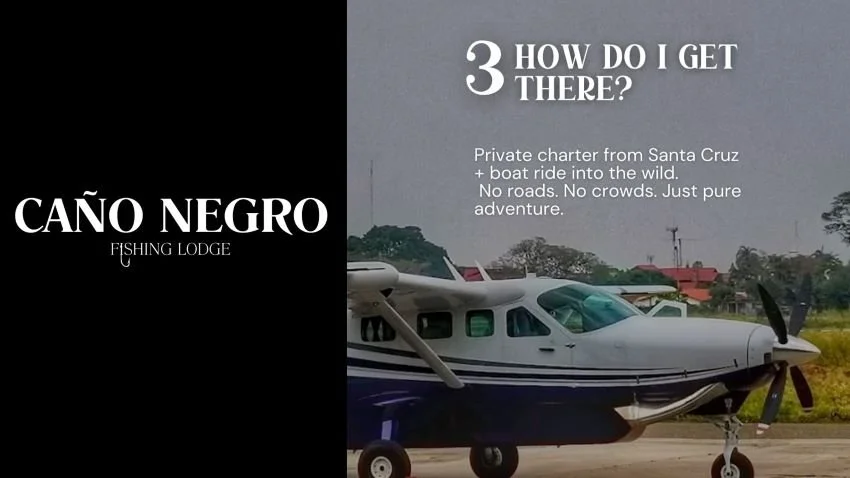
Remember, just because the airline in question allowed your rod tube and tackle bag doesn’t mean you’ll be able to get it to your final destination. If you’ll be taking a small private plane into the jungle, be sure to ask your outfitter about space and weight limitations. It would be shame to get your gear all the way down to South America and then not get to use it.

Don’t Let Luggage Issues Stop You From Traveling
Is it odd that I revel in writing these travel route and luggage reviews? Perhaps, but I like the challenge of figuring out a new destination and making sure I have optimal tackle when I get there. While I’m sure that fishing trip number one to Bolivia will have a unique set of challenges, I’m confident that we’ll want to go back. We’ll be better prepared each time we go. If jungle fishing appeals to you, especially on untrammeled protected waters, consider joining us on what promises to be an exceptional exploratory expedition.

Getting to Southern California for a fishing trip is remarkably easy, with multiple airports providing quick access to the fishing grounds — whether you’re chasing bass, yellowtail or tuna.