

Is a Liveaboard Fishing Trip Right for You?
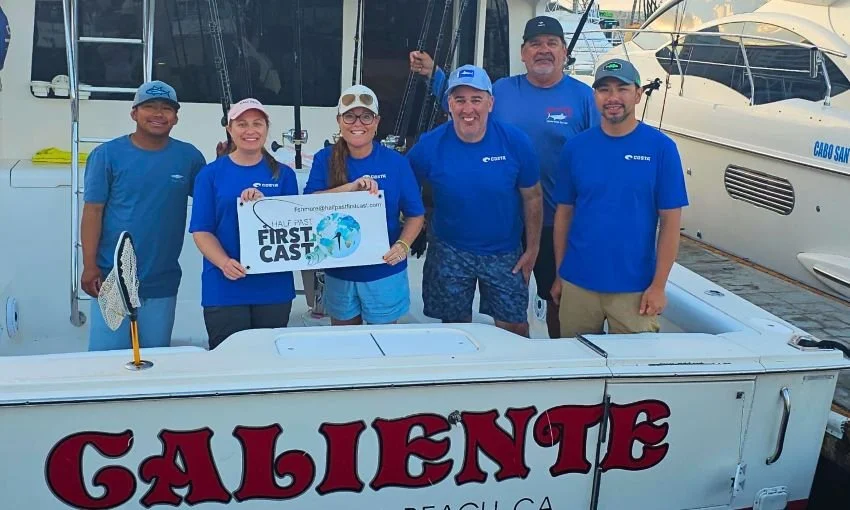
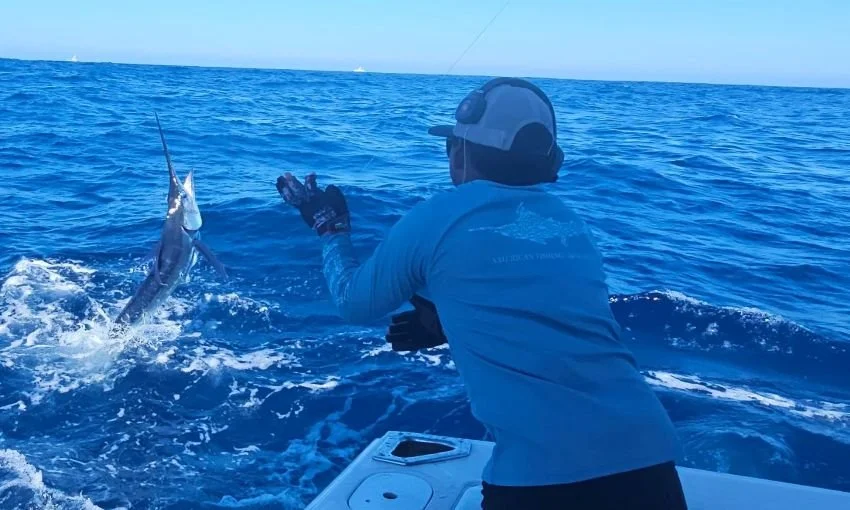
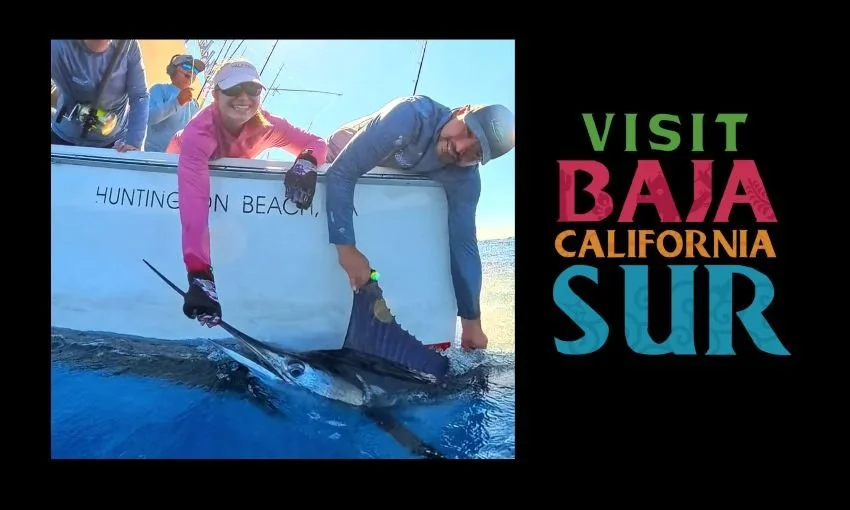
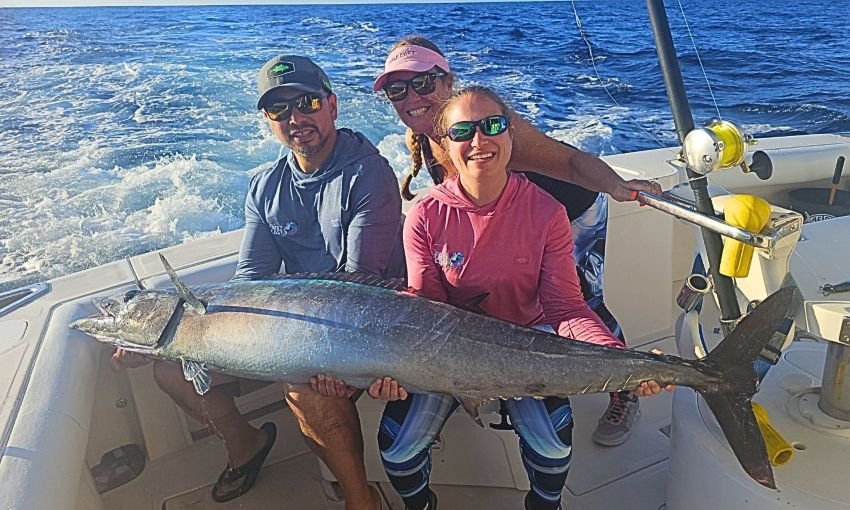
Our trip to Magdalena Bay on Caliente lasted parts of four days and all of three nights. It’s almost 200 miles from Cabo, and the trip there and back has the potential to be arduous. Ours turned out to exceed expectations in terms of the comfort of the ride, as well as the more important part – the fishing. We notched over 80 striped marlin in two days of trying, as well as five wahoo and two bonus sailfish.
For us, the juice was worth the squeeze. In fact, we’re trying to figure out how soon we can get back (fall of 2027?). Everything about the trip worked for us, but
Types of Liveaboard Fishing Trips
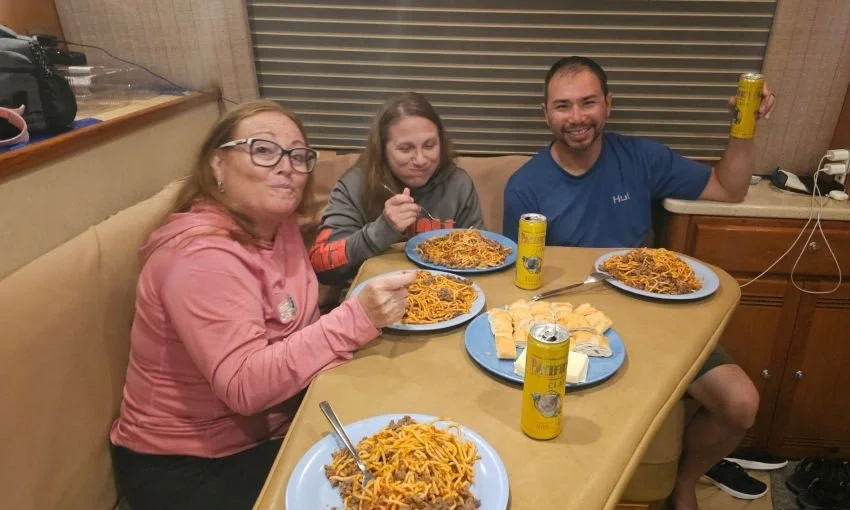
Caliente is a 40’ sportfisherman. There are two rooms, with multiple (small) beds each, and two heads, one with a shower. There is also a small internal air-conditioned space with couches, cooking facilities and a dining table.
We’ve been on other “houseboat” style adventures, notably in the Amazon. There we twice rode a shallow-draft barge that enabled us to get into the headwaters of remote rivers. There are also larger yachts that tow small sportfishing boats or pangas along with them. In Panama we’ve seen an old barge that’s been turned into a floating fish camp. In other words, there are various ways to skin this cat. Some of what I’ll write below, but for purposes of this article I’m generally talking about saltwater trips on larger boats, like the one we took in Baja California Sur.
Advantages of Staying on the Boat
So why would someone want to take a trip like this? They’re costly, potentially claustrophobic, and if you get a dud captain it could turn out to be a miserable experience. But the flip side of that is that if done correctly it can turn into the fishing trip of a lifetime. Ours certainly was, and that was partially the residue of good luck on weather and the location of the marlin, but it was also the result of our friends’ Mike and Samantha’s careful research and planning.
Advantage 1: Ability to Access Remote Waters – Mag Bay isn’t near any mid-sized or larger cities. It’s a few hours to the nearest airport and there aren’t good facilities for docking or fueling boats. As noted above, it’s almost 200 miles from Cabo. No one gets there by accident. With Caliente’s range and carefully rationed diesel, we could get there and back and fish two long days with all the conveniences of a modern tournament boat.
Advantage 2: Big Boat Comfort – There are numerous charter operations in certain towns in and around Mag Bay like Puerto Lopez Mateos and San Carlos. Most of the boats there, however, tend to be smaller – predominantly pangas. They catch plenty of fish, and when it’s calm they can go anywhere the big boats venture. When it gets sporty, however, they may not be able to leave the bay, at least not comfortably.
Advantage 3: More Fishing Time – We started fishing at daylight, about 7am, on the first day, and left around 4:30 to find a spot to anchor. On the second day, we started at that same time, and fished until it got dark, a little after 6pm. We were effectively in fertile water the whole time, giving us over 20 hours on prime ground. Compare that to a day charter, where you may leave at 7 and return at 4, with an hour of running time each way (possibly more). That’s 7 hours of fishing each day. So we effectively got three days’ worth of fishing in two days. That eases the sting of the price and the traveling time, especially since we were arguably in the best striped marlin fishing in the world.
Drawbacks to Consider
This trip was exceptional for us, but I know it’s not for everyone. Before you dive in feet first, here are some things to consider:
Do you get seasick? If you do, or there’s a significant chance that you will, this might not be ideal for you. We were on the boat 65 hours, with no place to get off. That’s a long time to be miserable.
Do you really like fishing? There’s nothing else to do on the boat. If you’re likely to be tired of chasing fish after a day, or you’re not sure, a single day charter might be a better option.
Do you need nightlife? This is a corollary to the last warning. We were asleep about 8pm each night and up at 5 without an alarm. No dancing, no singing, and (much to Hanna’s dismay) no board games.
Are you a light sleeper? There’s rocking and noise all night. If you need 7 or 8 hours, but you have trouble sleeping through disturbances, you’ll be better going back to a hotel each night.
Do you like the people you’re going with? You’re not going to be able to get more than 40 feet away from them for three days. Trust me, if something about them irks you it will be magnified on the boat.
Are you large? The bunks on the boat are small, and it can get claustrophobic. I’m not saying that you defensive lineman sized anglers won’t have a good time – but I am saying that the fact that I’m a sound sleeper and both Hanna and Samantha are five-foot-nothing worked to our advantage.
Do you need creature comforts? The boat carried limited freshwater in the hold. Hanna and Samantha took quick showers one day. Mike and I never did. As noted above, there was A/C and the food was good, but if you can’t live without premier linens and bespoke living arrangements for a few days, this ain’t for you.
Commitment to an area – What if we had run all the way up the Pacific coast to Mag Bay, only to find the area unproductive, and later learned that the better bite was up the other coast? That didn’t happen, and the Caliente crew were well-informed and well-prepared, but we were committed to that area or anyplace between there and Cabo. You do run the risk of missing out on different areas and bites that you’d get with multiple one-day charters.
Questions to Ask Before You Book
Samantha did most of the research on this one, and she left no stone unturned. Furthermore, my good friend Terry Battisti is friends with the owner of Caliente, so I had another person to vouch for them. If you go to Cabo, I highly recommend Captain Jaime and his mate Silverio – just don’t book them on the dates that we want. NO matter where you’re going, here are a few questions to ask before you book:
Have you made the trip before? Plenty of operations will take your money and promise you the world, but it really pays to go with someone who regularly makes the trip. Not only does that increase your likelihood of good fishing, but it ensures your safety and comfort.
Are you confident your boat has the range for the planned trip? Longer trips require more precautions, and if you’re going somewhere remote running out of gas is not an option. Nor will you want to cut your trip short to make sure you can get back.
How much fishing will you get? Be sure to agree on this ahead of time. Will you be running the entire way to your destination in one fell swoop or fishing your way there? Will you fish every day or just some of the days? We know that we got a lot of fishing in, but on two of the four days we did not wet a line.
What happens if the weather doesn’t permit the trip? Samantha knew that if the seas were too rough to go to Mag Bay, we’d trade out the liveaboard trip for three one-day charters, with enough of a difference in price to stay in a nearby hotel. There needs to be a backup plan. Otherwise you’ll either make an unsafe/uncomfortable trip, or you may miss out on your charter altogether.
Are there any costs or surcharges? Be sure to work a hefty tip into your cost estimations. Captain Jaime and Silverio worked their asses off – I’m not sure they ever slept or stopped moving. Also, find out if there will be extra charges for bait, or a fuel surcharge, or if food is provided. You need to know all of that in advance to ensure there are no surprises.
Is there truly a need to make this a multi-day trip? For Mag Bay, it made total sense for us to do it this way, and we’re glad that we did. But what if the fish had been right around the corner from the marina. Might we have been just as happy with two or three single day charters? Or perhaps happier.
Again, your mileage may vary as to whether this is the right option for you. If it’s available, go into the experience with your eyes open and a good attitude and prepare for a very special trip. We’ll be back, and we’ll certainly consider similar experiences elsewhere.

Getting to Southern California for a fishing trip is remarkably easy, with multiple airports providing quick access to the fishing grounds — whether you’re chasing bass, yellowtail or tuna.