
Beef, It’s What’s for Dinner
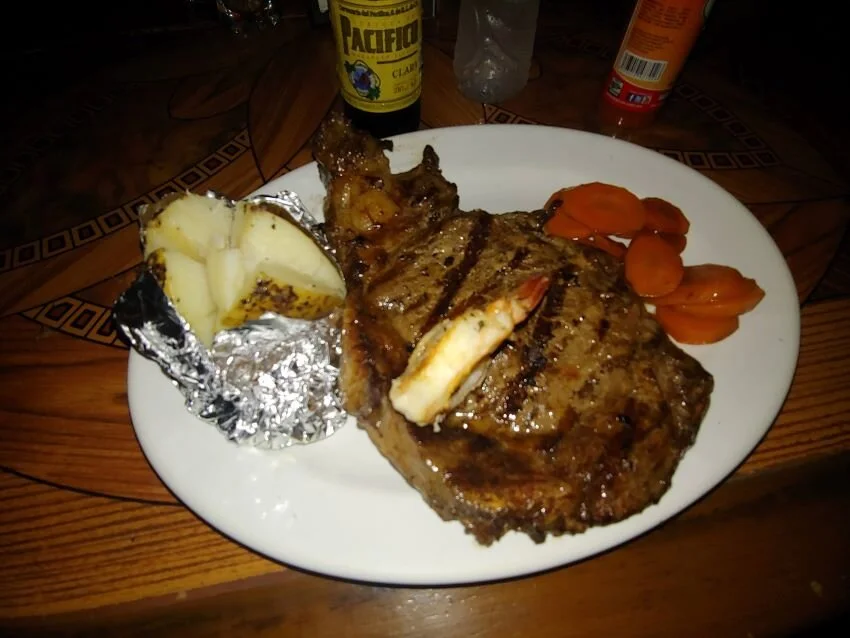
Food is not the most important part of great fishing travel, but it definitely enhances the overall experience. We always try the local cuisine – for better or for worse – and attempt to maximize our meal options at remote locations.
While seafood is of course a prime consideration at any water-based trip, we’ve also had some exceptional beef (and “beef substitutes”) in our travels — from the lower 48 to Alaska to Central and South America, even Africa. We’ve even mail-ordered some. Here are some of the most memorable ones:
Fortunately, there are lots of other places that combine great fishing with great beef. We need to go to Argentina (golden dorado) and back to Japan for Kobe beef. New Zealand’s on the list, too.

If you’re like me, you already get way too much email: Work emails, chain letters from friends, unsolicited messages promising Russian brides and harder boners. No matter how many times you avoid them or press “unsubscribe” they always seem to return, and each annoying email brings two friends with it.

Business travel can be hell on earth, but if you add a fishing trip to the front or back end of the work effort it can make all of the difference in the world. You might be surprised to find out the cities that have great angling. Here’s how to make it happen.

The best time to go on a fishing trip is “any time you can,” but that maxim doesn’t tell the whole story. Our plan has always been to fish “the best places at the best times.” When that’s not possible, how do you know whether it makes sense to spend your hard-earned cash (and energy and vacation time) to go during an off-peak period?

While I occasionally forget to bring something on my fishing trips, through a system of lists and post-it notes I’ve minimized that problem. It’s more likely that I’ll bring something that I end up not needing at all, which is usually the best kind of problem to have. Even if you’re going someplace centrally-located, there are certain things you cannot easily replace.

It has been a tough period for the airlines and for air travelers. Between pandemic-related shutdowns, ever-changing health protocols, oddball weather patterns, and a few unforced errors from the carriers, flying to a fishing destination has occasionally become a nightmare. If you must fly, or prefer to fly, here are eleven suggestions to minimize the chance of your vacation being totally destroyed.
I’ve now been to South America four times but I’ve never left the friendly confines of Brazil. I went to Rio de Janeiro as a teenager (no fishing), and over the past decade I’ve been to the Rio Negro region twice, along with an exceptional trip to Rio Juruena. That needs to change. Here are five more that are currently at the top of my list.

When I compiled my recent list of “Ten North American Dream Fishing Trips,” I knew that is wasn’t a comprehensive survey, nor was it meant to be. Here are five more special destinations that are on my mind right now. The fishing comes first, of course, but each one offers something a little bit special on top of that – be it history, the way you get to the fish, the food or the scenery.

You’ve saved for your bucket list vacation, acquired all of the necessary gear and the luggage to get it there. The forecast is perfect, the flight gets off without a hitch, but when you arrive at the baggage claim it’s the nightmare scenario. Either your rod tube doesn’t arrive or its contents are destroyed. Here’s how to avoid that nightmare scenario.

Our trip home from El Salto was scheduled for an otherwise innocuous weekend that turned out to be one of the worst travel experiences of our lives. We were scheduled to travel home on American Airlines, leaving three hours to transfer our bodies and our luggage in Dallas, but we unknowingly stumbled into a minefield --- American canceled over 400 flights and we were caught up in the chaos.
Another solid travel year for the Half Past First Cast team. Judging by our social media feeds you’d think we were gone all the time, but to me it felt like we were home more than usual. Here are a few stats, notes and tidbits to tidy up the end of year accounting.