

How Did Arapaima Get to Bolivia?
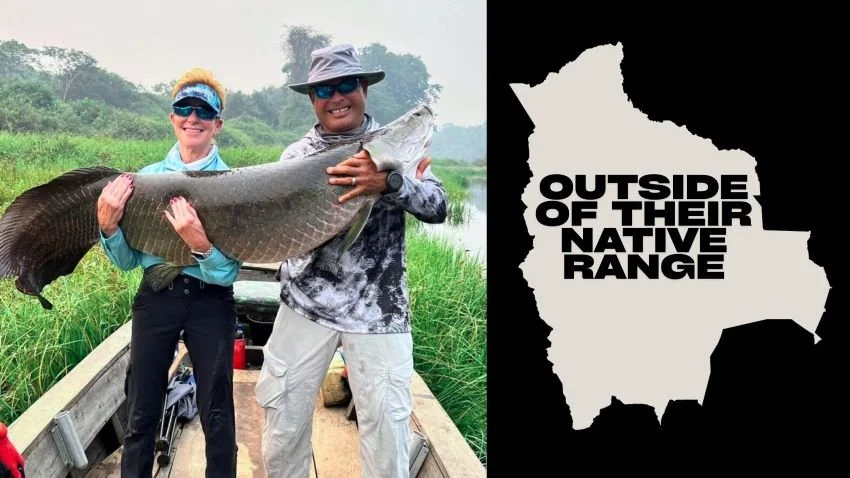
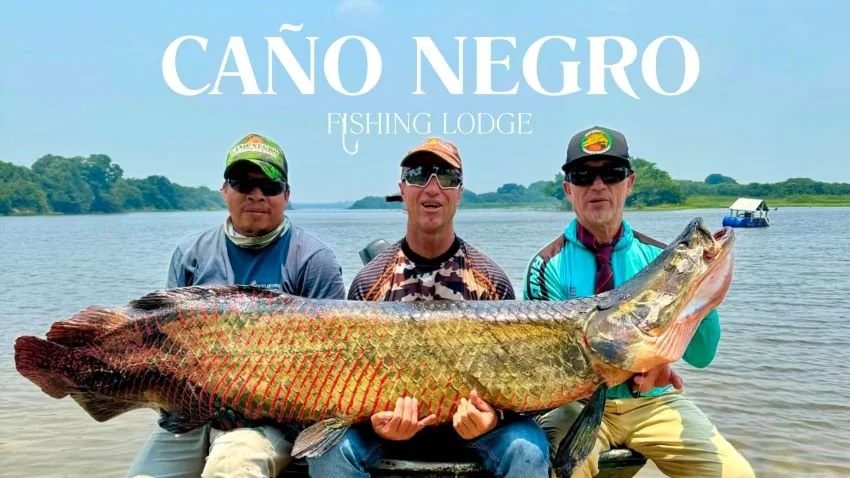
When we decided to visit Caño Negro Fishing Lodge in Bolivia, I was excited for the multispecies opportunities, but it was the chance to catch an arapaima (also known as pirarucu or paiche) that really convinced me it was a fishery we had to experience.
As I started to do my research, though, it seemed that the world’s largest freshwater scaled fish only showed up a few years ago. Looking through our friend Dan Smith’s trip report from August 2015, they weren’t mentioned at all.
The Arapaima’s native range includes the Amazon River system of Brazil, southern Colombia, Amazonian Ecuador, and northeastern Peru; the Rio Tocantins basin in central Brazil; and the Essequibo River of Guyana.
So how did they end up in Bolivia?
It appears they were introduced, either when the hatchery facilities overflowed in the mid-1970s and they were swept into waters where they had no natural predators, or perhaps by anglers or subsistence fishermen who thought they knew better than Mother Nature.
Here are a few deep dives into their history and interactions in Bolivian waters.
A freshwater giant is a boon to Bolivian fishers, but an unknown for native species
This Amazonian fish was going extinct. Then it became a menace
Piranha-eating Paiche fish that starved Bolivian Amazon fishermen catches karma
For those of you who want to dig into the science a little more, check out the articles below:
Arapaima have also been observed, likely introduced by backyard biologists, in Florida, Louisiana and Texas.
We’d never support upsetting an existing ecosystem with new or otherwise invasive species, but what makes the Bolivian case intriguing is that it’s led to a boom of sorts. While the arapaima may be threatened in the northern portions of its South American range, in Bolivian waters they are plentiful. We’ll still treat them gently after landing the big brutes and release them alive.
If you’d like to join us on our inaugural Bolivian adventure – with a great shot at arapaima plus other jungle critters like payara and redtail catfish – shoot us an email and we’ll fill you in on the details.



Meanmouth bass are rare hybrid trophies—part spotted bass, part smallmouth. See replica mounts, why they’re unique, and the controversy behind their spread.