
Beyond the Tuna: Discover Whales and Dolphins While Fishing Panama’s Gulf of Chiriquí
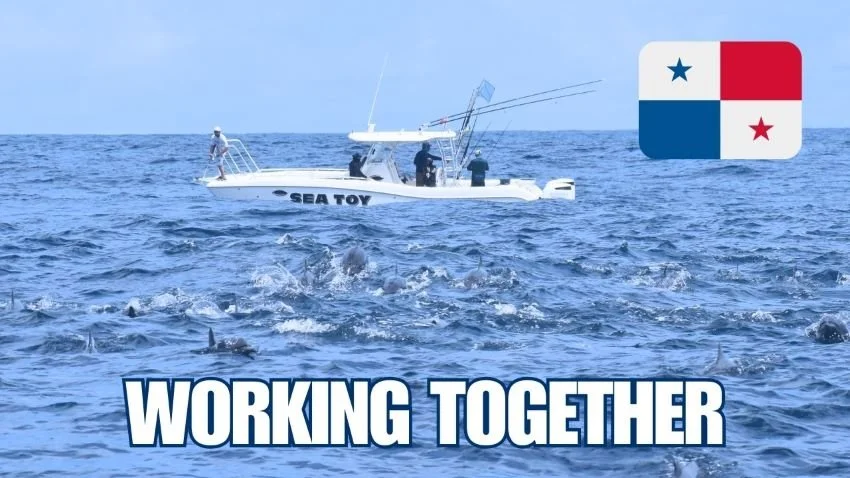
We’ve spent countless hours in the Gulf of Chiriquí chasing pods of dolphins and schools of porpoises—not just because they’re incredible to watch, but because they often signal where the tuna are feeding. That’s the main draw of our trips to Sport Fish Panama Island Lodge, yet the same rich currents and abundant baitfish that make this region one of the world’s top tuna fisheries also attract an astonishing variety of marine mammals, including migrating humpback whales.
Whether you’re a hardcore angler who loves seeing the entire ecosystem in motion, or a traveler who wants more than just fishing on vacation, Panama delivers. The Gulf of Chiriquí offers world-class whale watching, dolphin encounters, and unforgettable wildlife viewing—all alongside legendary tuna action. Join us at Isla Parida, and you’ll discover that seeing thousands of dolphins or a breaching humpback can be almost as thrilling as fighting a yellowfin on the line.
The Gulf of Chiriquí: A Marine Mammal Hotspot
The Gulf of Chiriquí in Panama is one of Central America’s most vibrant marine ecosystems. Powerful ocean currents swirl around volcanic seamounts, pulling in nutrients that attract massive schools of baitfish—and in turn, a spectacular array of predators and marine mammals. It’s the same natural buffet that makes this region famous for world-class tuna fishing, but it also draws migrating humpback whales, pods of dolphins, and even elusive porpoises.
Much of your time on the water will be spent inside a national marine park and near the protected waters of Coiba National Park, both of which are UNESCO World Heritage treasures. (Learn more about the Gulf of Chiriquí and Coiba National Park).
While commercial fishing exists here, strict regulations help keep the ecosystem in balance. Because this sparsely populated region has been wisely protected by governments and NGOs, the Gulf remains a true “Jurassic Park” of the sea. That’s why anglers and eco-travelers alike find it to be a hotspot for marine mammal encounters, where it’s not unusual to see whales, dolphins, and other wildlife up close while chasing trophy tuna.
Humpback Whales in Panama
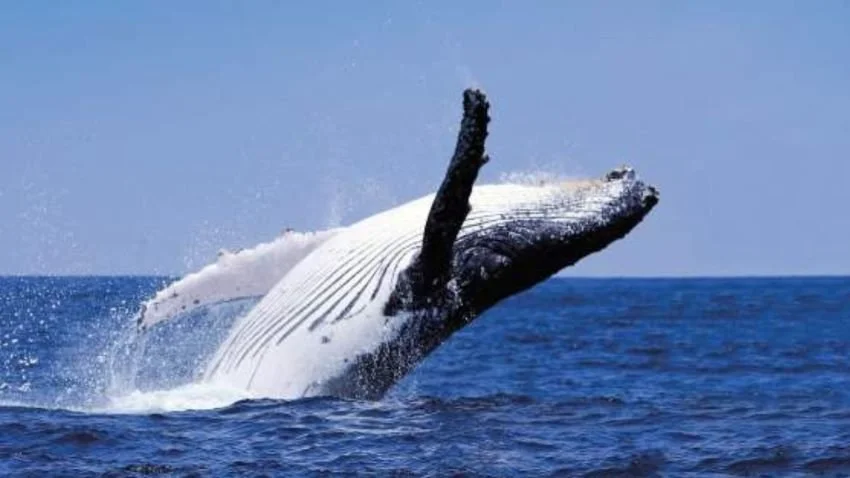
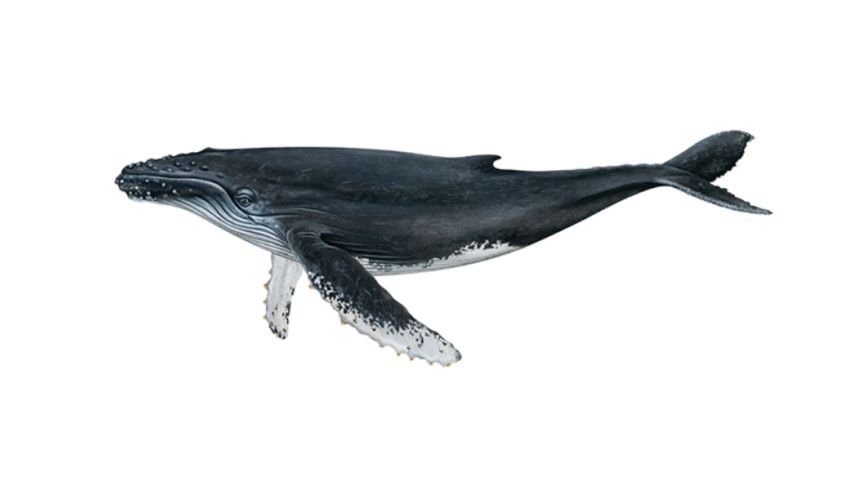
Panama’s Gulf of Chiriquí is one of the few places on Earth where you can see humpback whales from both the Northern and Southern Hemispheres. Thanks to Panama’s equatorial location, migrating whales from each population converge here. Calm, nutrient-rich waters provide ideal conditions for breeding, mating, and calving, drawing up to a thousand humpbacks each year.
Whale watching season:
Southern Hemisphere whales: July–October
Northern Hemisphere whales: December–April
According to the Tourism Authority of Panama and the International Whaling Commission, the whale watching season in Panama typically runs July through October (Southern Hemisphere whales) and again from December through April (Northern Hemisphere whales).
You won’t always encounter them while fishing, but it’s not unusual to hear a thunderous tail slap while casting for tuna or to spot a mother with her calf traversing the area. For an even better chance, you can take a dedicated whale watching tour before or after your fishing trip with trusted local operators:
Seeing a breaching humpback or a mother guiding her calf through Panama’s Pacific waters is an unforgettable addition to any Gulf of Chiriquí fishing trip.
Dolphins and Porpoises
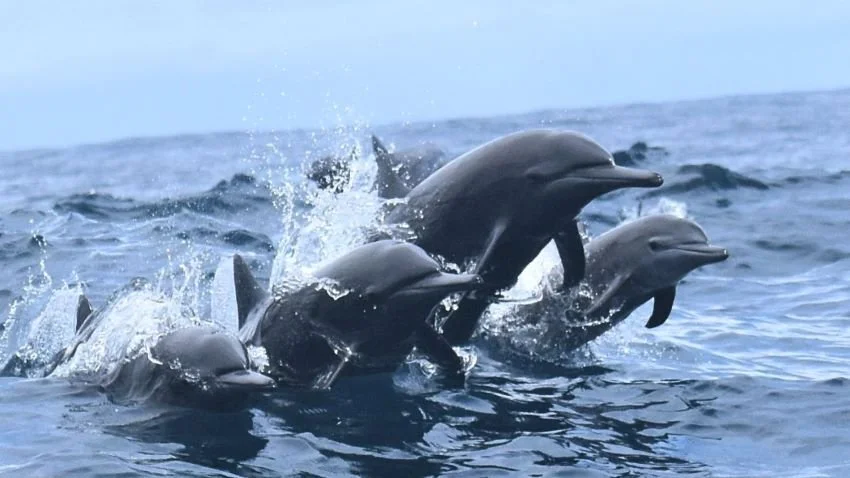
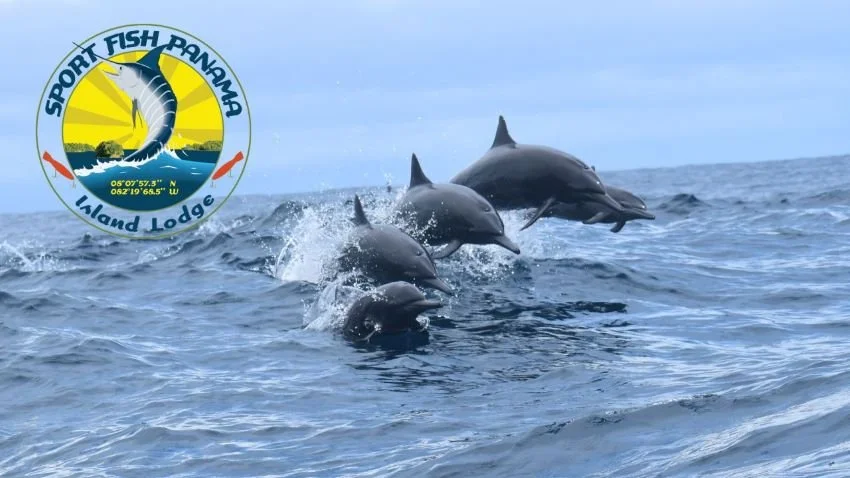
I will be eternally grateful to the dolphins and porpoises of the Gulf of Chiriquí , because their amazing hunting skills, working together with our targeted tuna and a variety of birds, help us pinpoint the fish. Sometimes we find them mid-hunt, but other times we actually sit in the tuna grounds and wait for the marine mammals to get the party started. Then we’ll get out in front of them and try to intercept the tuna.
As we ride out to the tuna grounds, the dolphins will join us. You can stand on the front deck (hold on tight) and watch as they magically crisscross in front of the boat. Or follow the commercial boats and see how they grab the bait without ever getting hooked on the lines. They are simply amazing creatures. We’re spoiled by having seen thousands of them, but if you just stop and look for a moment you’ll realize how intelligent, gifted and agile they are.
The common species in the region spotted dolphins (Stenella attenuata) and bottlenose dolphins (Tursiops truncatus), but my favorites are the spinner dolphins. As their name suggests, they go completely vertical and then do a 360 – their mad hops are awe-inspiring.
Responsible Encounters
We are fortunate to see whales, dolphins, and a wide array of birds that would make serious birders drool with envy while fishing in these waters. To preserve these encounters, responsible practices are essential:
Keep a respectful distance from marine mammals.
Never chase or harass them.
Observe quietly and appreciate them without interference.
Just as we handle fish carefully if they’re not headed to the pan or the grill, respecting the animals around us ensures future generations can experience the Gulf’s extraordinary wildlife – and that we’ll be able to continue to explore their variety.
Why It Makes a Panama Fishing Trip Even Better
So why does all this matter? Well, if like me you consider yourself a hard-core, single-minded angler, prepare to be wowed. You may even stop casting for a moment when you see how the pieces all fit together like an oversized game of wildlife Jenga. And if you’re bringing someone who likes fishing, but is not quite as obsessed, this provides an added value. In fact, they may remember the whales and dolphins as much as the 200-pound tuna or line-stripping cubera.
Panama’s Gulf of Chiriquí isn’t just about world-class fishing—it’s about being part of an ecosystem that will leave you amazed. Join us for a hosted adventure at Sport Fish Panama Island Lodge, where unforgettable wildlife encounters and trophy fishing go hand in hand. Email us for more information.
What do you eat at an Alaska fishing lodge? See a week of breakfasts, lunches and dinners at Bear Trail Lodge, including fresh Alaska seafood.